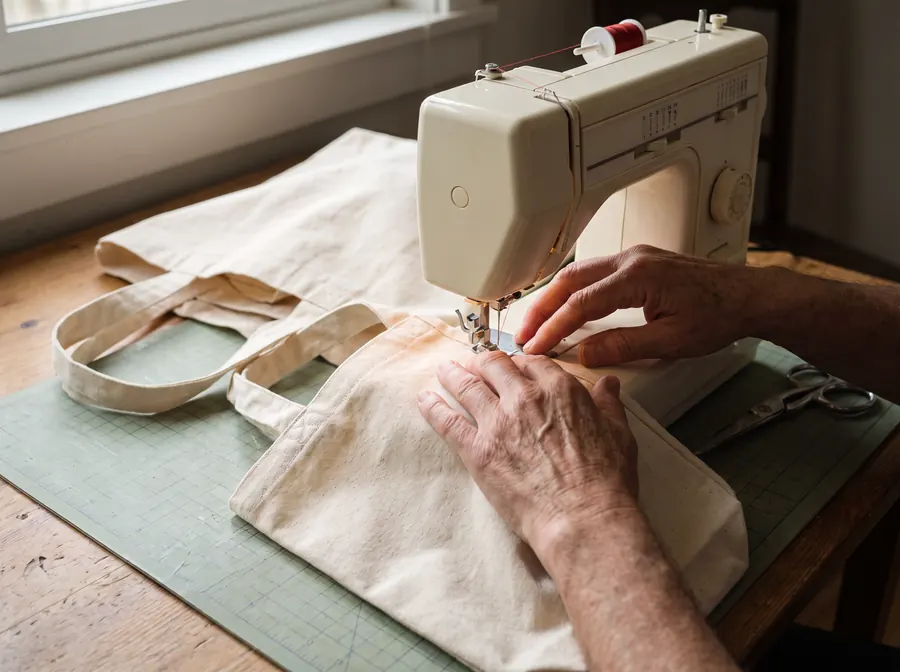
Most beginner quilters already own a sewing machine or are about to buy their first one, and the question is whether it will cope with a quilt. The short answer: piecing works on almost any decent machine, while quilting the layers together is where a few features and a bit more space under the arm start to matter.
That is why the three picks above come with a guide. Below you will find what a quilting machine needs, what you can skip, how much space you need for the quilts you want to make, and a quick test before you buy. If you are new to sewing in general, start with our beginner sewing machine guide first.
What a quilting machine needs
Quilting has two stages. Piecing is sewing fabric pieces together with straight seams, almost always with a 1/4 inch seam allowance. Quilting is stitching through the three layers (top, batting and backing) to hold them together, either in straight lines or with free-motion stitching. These features make one or both stages easier:
| Feature | What it does | How much it matters |
|---|---|---|
| 1/4 inch foot | Its edge sits exactly 1/4 inch from the needle, so every seam allowance matches | High for piecing |
| Walking foot (even feed) | Feeds the top layer along with the bottom, so layers do not shift | High for straight-line quilting |
| Needle up/down | The needle stops in the fabric, so you can turn the quilt without losing your place | High |
| Speed control | Lets you sew slowly and evenly without a light foot on the pedal | High for beginners |
| Drop feed | Lowers the feed dogs so you can move the quilt freely for free-motion quilting | Needed for free-motion |
| Presser foot pressure | Lets you lighten the foot on a thick quilt sandwich | Medium |
| Knee lifter | Raises the presser foot with your knee, so both hands stay on the quilt | Comfort |
| Space right of the needle | The rolled quilt has to fit through here | Grows with quilt size |
None of the three picks has everything in the box. The Juki HZL-F400 comes with a walking foot and knee lifter; the Baby Lock Jazz II with a knee lift, 1/4 inch foot and the most space; the Emerald 118 gives you speed control and needle up/down for the lowest price. The table above helps you decide which gaps you can live with.
Features you can skip
Hundreds of stitches. Quilting uses a straight stitch almost all the time, plus a zigzag or blanket stitch for appliqué. A machine with 28 stitches quilts as well as one with 200.
Embroidery functions. Nice to have, but they add cost without helping you piece or quilt.
“Quilting edition” labels on their own. Some of these bundles simply add a wide table and a few feet. Compare what is actually in the box with the table above.
How much space do you need?
Space to the right of the needle matters most when you quilt at home, because the rolled-up quilt sits there while you stitch.
- Baby quilts, table runners, placemats and wall hangings: a standard machine is enough. This is where most beginners start, and where the Emerald 118 fits.
- Lap quilts: still fine on a standard machine if you roll the quilt tightly and support its weight on a table. A knee lifter and walking foot make it noticeably easier.
- Twin and bed-size quilts: extra space under the arm is a real help. The Jazz II’s 12 inches to the right of the needle is the reason it is on this list. Many quilters also send big quilts to a longarm quilting service instead of quilting them at home.
On a small budget, the Brother BM3850 from our beginner guide includes a quilting foot, a quilt guide and a wide table for about $320. It has no needle up/down button, but it will piece your first quilts.
Test before you buy
If you can see a machine in a store, bring a small quilt sandwich: two squares of quilting cotton with batting in between, pinned or basted.
- Sew a few seams with a 1/4 inch foot and measure them with a ruler.
- Quilt a few straight lines through the sandwich, with a walking foot if the store has one for that machine.
- Lower the feed dogs and move the sandwich in loops. Listen for skipped stitches and look at the back for loops of thread.
- Use needle down, turn the sandwich 90 degrees and keep sewing.
- Check how much space you have when you roll a towel under the arm to stand in for a quilt.
Buying online? Check the return policy and do the same test in the first days after it arrives.
Which one should you pick?
- You want to make small quilts and keep the budget sensible: the Husqvarna Viking Emerald 118. Speed control and needle up/down are the two features that make a first quilt calmer.
- You want one machine for quilts and clothes: the Juki HZL-F400. The walking foot and knee lifter in the box cover quilting, and it still sews garments and buttonholes.
- You already know you want bed-size quilts: the Baby Lock Jazz II, for the space under the arm and the quilting feet in the box.
Whichever you choose, the quilt you make on it matters more than the machine. Start with a baby quilt or a table runner, finish it, and you will know exactly which features you miss.
How we picked
- We did not test these machines ourselves. The picks come from research: each machine's spec list on the maker and store product pages, checked against the quilting features in this guide.
- We picked one machine for each kind of beginner quilter: small first quilts on a sensible budget, one machine for quilts and clothes, and bigger quilts with more room.
- Each machine had to support free-motion quilting and have at least two of these: speed control or a slow mode, needle up/down, a knee lifter, or extra room under the arm.
- Prices are the listed price on the check date, and all three were in stock that day. We only link stores we have a partnership with, so we earn a commission on all three; within that store we chose by features, not by price.
Read more about how we choose what to recommend.
Questions beginners ask
What is the best sewing machine for a beginner quilter?
The one that fits the quilts you want to make. For baby quilts, table runners and a first lap quilt, a machine with speed control and needle up/down like the Husqvarna Viking Emerald 118. For one machine that does quilts and clothes, the Juki HZL-F400 with a walking foot and knee lifter in the box. For bed-size quilts, a machine with more space under the arm like the Baby Lock Jazz II.
Do I need a special quilting machine to start quilting?
No. Piecing a quilt is straight seams with a 1/4 inch seam allowance, which any solid sewing machine can do. A 1/4 inch foot and a walking foot make it easier, and more space under the arm helps once you quilt larger quilts at home.
What is throat space and why does it matter?
Throat space (or harp space) is the distance from the needle to the body of the machine. When you quilt, the rolled-up quilt has to fit through that gap, so more space means less wrestling with a big quilt.
Do I need a walking foot for quilting?
It helps a lot. A walking foot feeds the top layer along with the bottom, so the three layers of a quilt do not shift and pucker when you quilt straight lines. Check whether your machine includes one or what the optional foot costs.
Can I quilt a big quilt on a regular sewing machine?
Yes, with patience. Roll the quilt tightly, support its weight on a table so it does not drag, and start in the center. Many beginners quilt their first big quilt in sections or send it to a longarm quilter.
Want a guided start?
If you prefer learning by watching, this is the beginner sewing course we recommend. Everything you need to begin is also in our free sewing starter plan.
Not affiliate links yet: we have applied to Domestika's program. Your price is the same either way.
Basic Sewing with a Sewing MachineBuy once: unlimited access forever, at your own pace, also on the app. The Domestika Black Friday offer is live: courses at 99% off, bundled with a 30-day Plus trial. You see the current price on the course page before you pay.
Next step: Sewing Machine 101: Make Your First Dress by Juliet Uzor, winner of The Great British Sewing Bee 2019.